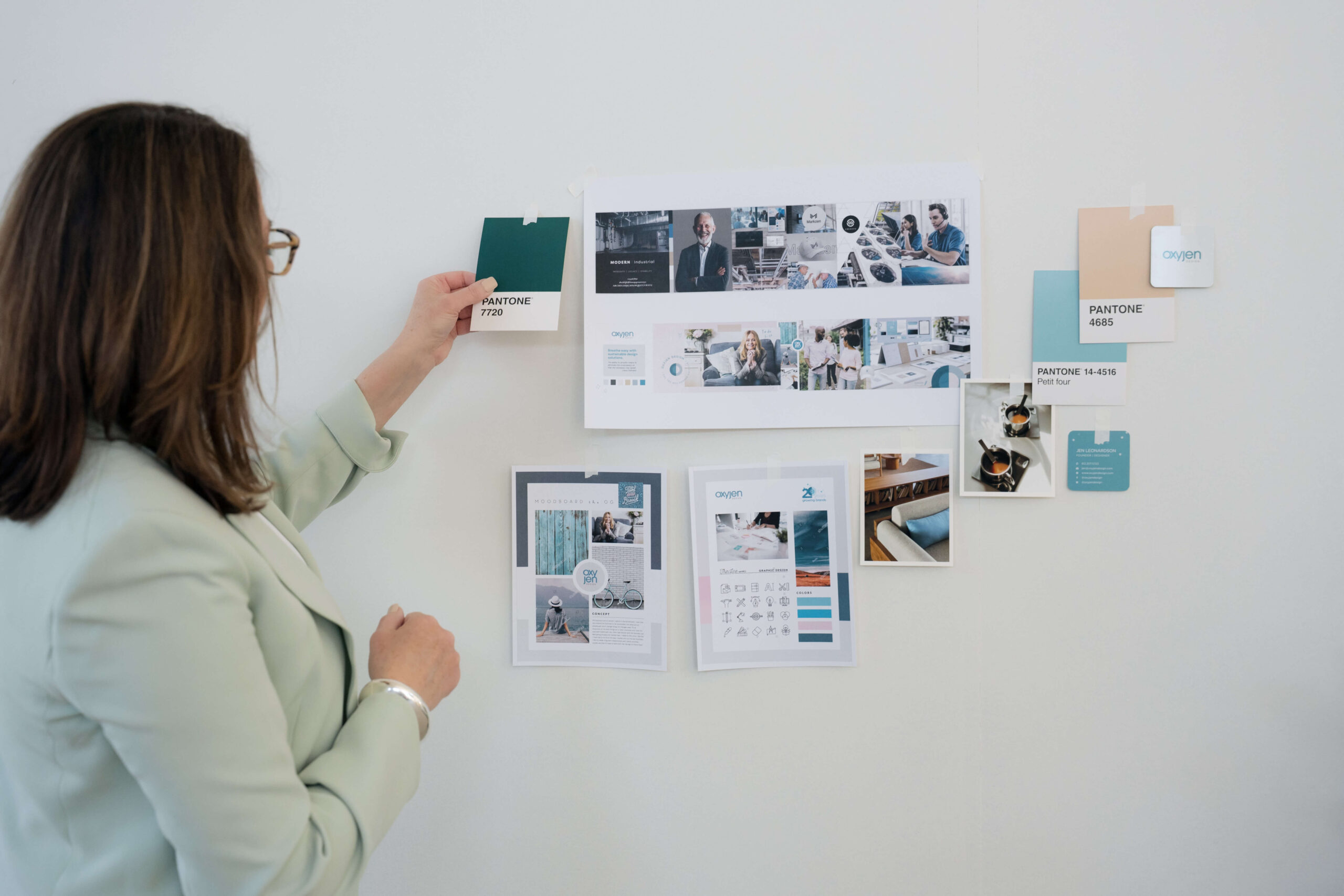
Is Your Brand Keeping Up with Your Business?
As businesses grow, their brand often gets left behind.
It usually doesn’t happen overnight. A new service is added. The company enters a new market. Marketing materials are updated one piece at a time. The website gets a few quick edits. Sales presentations evolve independently. Before long, the business has changed—but the brand hasn’t kept pace.
I see this often with manufacturing companies, medical device organizations, and growing businesses that have been focused on serving customers rather than stepping back to evaluate how they’re presenting themselves.
The good news? It’s usually not a sign that everything needs to be replaced. More often, it means your communications need to be realigned.
Here are a few questions worth asking:
-
Does your website accurately reflect who you are today?
-
Are your sales materials, presentations, and reports telling a consistent story?
-
Has your company evolved beyond the brand you launched with?
-
Are your sustainability reports, annual reports, or open enrollment guides engaging—or simply informational?
-
Would a prospective client immediately understand what makes your organization different?
If you hesitated on more than one of these questions, your brand may be working harder than it needs to.
A strong brand isn’t just a logo or color palette. It’s the experience people have every time they interact with your company—whether they’re reading your annual report, visiting your website, reviewing a proposal, or walking past your trade show booth.

Introducing the Brand Alignment Audit
That’s why I’m introducing a new Brand Audit designed to help organizations identify where their communications are aligned—and where there may be opportunities to improve.
Together, we’ll take a strategic look at your brand across key touchpoints, including:
-
Website and messaging
-
Visual identity and consistency
-
Sales and marketing materials
-
Reports and presentations
-
Overall brand experience
You’ll receive practical recommendations that help prioritize improvements based on your goals, budget, and timeline.
Sometimes the answer is a simple refresh. Sometimes it’s building better templates and systems. And sometimes it’s realizing your business has outgrown the story it’s been telling.
If you’ve been wondering whether your brand still reflects the quality of your organization, I’d love to help you find out.
Let’s make sure your brand is keeping up with your business.
Quick Brand Check
How many of these can you answer “Yes” to?
✓ Our website reflects who we are today.
✓ Our marketing materials have a consistent look and message.
✓ Our reports are visually engaging and easy to navigate.
✓ Our sales team is using current collateral.
✓ We feel confident sending prospects to our website.
✓ Our brand communicates the quality of our work.
If you checked four or fewer, it might be time for a Brand Audit.

Finding Inspiration in Unexpected Places
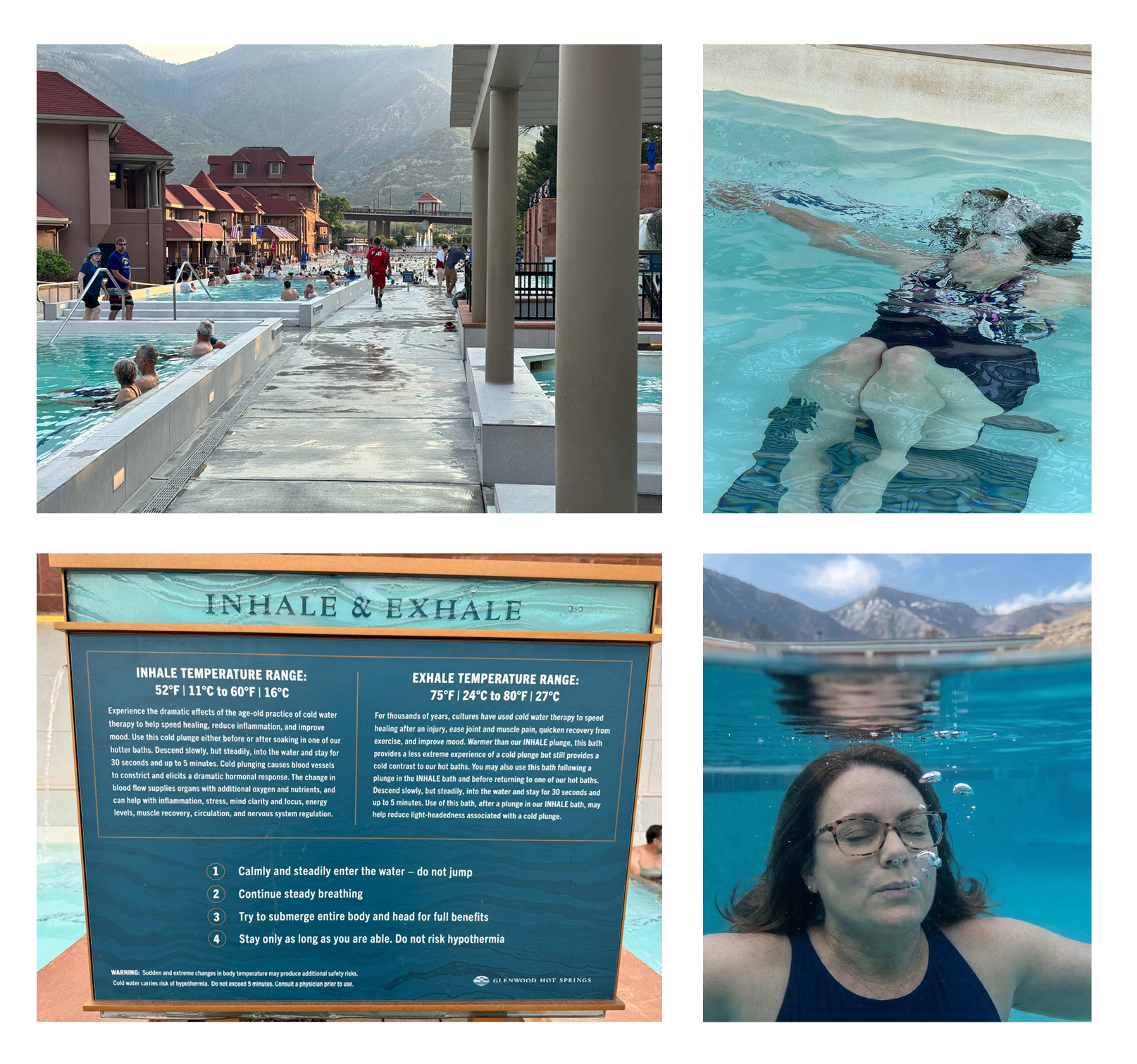
A recent vacation to Colorado gave me an unexpected reminder of why I chose the Oxyjen name—and how my creative process has evolved over the years.
While visiting the Glenwood Hot Springs Pool, I noticed something that immediately caught my attention. Alongside the traditional hot pools were two contrast pools called Inhale and Exhale.
Curious, I stepped into the Inhale pool first. At just over 50 degrees, it definitely lives up to its name! The initial shock quickly gave way to heightened awareness and energy. Right beside it was the Exhale pool, a warmer transition pool designed to help your body relax and recover before moving on to the soothing Cascade Waters.
As I stood there (trying to catch my breath in the Inhale pool!), I couldn’t help but think about my own creative process.
When I named my business Oxyjen Design, I wanted it to reflect the idea of bringing fresh energy and clarity to every project. Over time, that evolved into the process I use with clients today:
Inhale
We gather information, ask strategic questions, listen, and immerse ourselves in your business. We uncover what makes your company unique and identify the opportunities ahead.
Oxygenation
Together, we refine ideas, explore creative directions, and shape a clear brand strategy and visual identity that feels authentic to your organization.
Exhale
Your brand comes to life through thoughtful marketing materials, websites, presentations, trade show graphics, and communications that help your story reach the right audience with confidence.
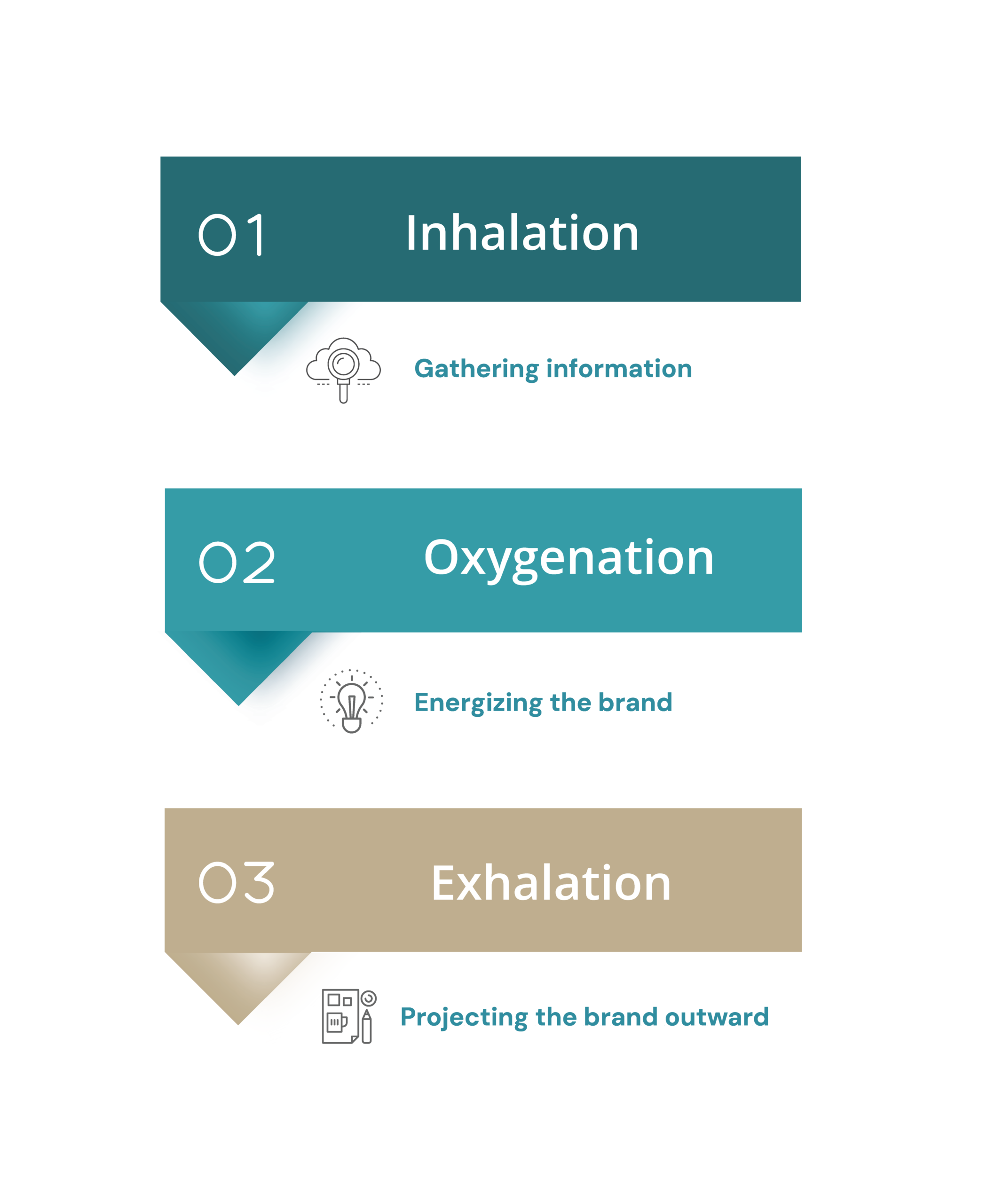
Just like the contrast pools, each stage has a purpose. You can’t skip the deep breath before the release, and the strongest results come from moving thoughtfully through the entire process.
It was a fun reminder that inspiration has a way of showing up in unexpected places—even while completely submerged in a 52-degree Inhale pool. Sometimes the best ideas come when we slow down, take a deep breath, and simply pay attention.
Have you ever experienced a moment on vacation that unexpectedly connected back to your work? I’d love to hear about it.
Best,
Jen Leonardson
Founder, Oxyjen Design

Fresh Creations: New Projects, Site & Sneak Peeks!
Summer has brought a season of fresh work and new beginnings at Oxyjen Design, and I’m excited to share a few recent highlights with you.

Launching a Brand as Innovative as the Technology Behind It
One of my more recent client projects was collaborating with MedTech Machine & Design, a catheter machine manufacturing start-up in the medical device industry.
As a growing company introducing highly specialized equipment to the market, they needed a brand presence that felt credible, modern, and aligned with the quality of their technology.
Together, we developed:
- A new logo and visual identity
- A refined color palette and supporting brand elements
- A new website
- Tradeshow materials for MD&M Minneapolis
The goal was to create a cohesive brand system that would help them communicate clearly and confidently across every touchpoint—from digital presence to in-person industry events.
One of the unique challenges in medical device manufacturing is communicating highly technical products without overwhelming the audience. Whether it’s catheter manufacturing equipment, delivery systems, or other specialized technologies, companies need to balance engineering precision with clear, accessible messaging.
Throughout the project, we focused on visual storytelling that would help simplify complexity. Rather than relying solely on technical specifications, we developed a brand and website experience that highlights the value of the technology while supporting credibility and trust. This included thoughtful use of imagery, clear information hierarchy, and a visual system designed to communicate innovation without confusion.
The result is a modern brand presence that better reflects the sophistication of MedTech Machine & Design’s solutions and positions them for continued growth within the medical device industry.
It’s been exciting to see the strong interest they’ve already generated and the momentum they’re building as they continue to grow.

Behind the Scenes: My Recent Brand Photoshoot
I also recently completed a new brand photoshoot with Rachel Lea Photography here in the Minneapolis area, and it was such a great experience from start to finish. I found Rachel on the 1% for the Planet directory and when I saw her work, I knew she would be a perfect fit.
I wanted photos that felt natural, professional, and aligned with the direction of my updated website and brand presence—not just traditional headshots.
Rachel guided me through the entire process in a very thoughtful and strategic way. As you can imagine, having a photoshoot of yourself can be a little intimidating – and includes a lot of prep work. But not with Rachel! Before the shoot even began, she put me at ease by providing a helpful planning guide that included recommendations for:
- Clothing color palettes
- Natural fibers and texture suggestions
- Which props to bring
- Overall visual direction
One thing I especially appreciated was her encouragement to focus on muted, complementary tones rather than trying to perfectly match my brand colors. That approach helped everything feel much more authentic and timeless.
We chose NoDo Studio in Chaska, MN for the shoot, which turned out to be the perfect location. The natural light, textures, and clean aesthetic worked beautifully for the kind of imagery I was hoping to create.
Rachel made the entire process feel relaxed and collaborative, and she did an amazing job capturing images that feel professional while still feeling like me. If you are looking to update your photos, I highly recommend her! Learn more about Rachel and her branding sessions here: https://rachelleaphoto.com/
News From the Studio
 After finishing up the photoshoot, I was able to add these photos as a finishing touch to my newly redesigned website!
The refresh gave me an opportunity to better reflect the type of strategic branding and marketing work I’m most passionate about—particularly within medical device, manufacturing, sustainability-focused, and technical industries.
The new site includes:
- Updated portfolio work
- Refined messaging
- Expanded case study content
- A clearer overview of services and process
While you are here, take a look around! I’d love to hear what you think!

When Your Brand Lives in One Person’s Head
Most growing companies have that person.
The one who knows exactly how the brand should look, sound, and feel.
Maybe it’s a marketing manager.
Maybe a designer.
Sometimes it’s even someone in sales who has been around long enough to “just know.”
For a while, that works.
But it creates a fragile system.
When brand knowledge lives in one person instead of being built into a shared structure, a few things start to happen:
• Teams recreate materials instead of reusing them
• Messaging shifts between departments
• Turnaround times get slower
• Quality becomes inconsistent
Not because people aren’t capable.
Because they’re missing the systems that make good work repeatable.
The companies that solve this do one thing differently
They build brand systems, not just brand assets.
Instead of relying on individuals, they create tools the entire team can use:
• Clear brand guidelines
• Reusable templates
• Consistent messaging frameworks
• Organized design assets
This allows teams to move faster without second‑guessing.
It keeps materials consistent across proposals, presentations, marketing, and sales.
And it removes the constant need for ad‑hoc design help.
For technical companies in particular—where credibility and clarity matter—this consistency builds trust over time.
Strong brands aren’t just well designed.
They’re well managed.
A quick question for you
If the person who “knows the brand” left tomorrow…
Would your team still be able to produce consistent, on‑brand materials?
If the answer is not really, it might be time to build the systems that support long‑term growth.
If you're thinking about putting a real brand system in place, just reply to this email. I'm happy to share how we typically approach it.

What I’m reading lately…
I was part of a Peer Pod accountability group last year with several other conscious marketing business owners, led by Ashley of Ashley Sang Consulting. It was such a great group and I highly recommend her for help when aligning your brand to your values.
One of the things suggested to me in our group was to read The Artist’s Way by Julia Cameron. I finally got around to it (I’m currently on Week 7) and let me tell you - it’s a lot of work, but so worth it. You sign a contract with yourself committing to the reading and to take yourself on an “artist’s date” every week. The date can be anything you enjoy doing, but it’s usually tied to some of the exercises at the end of each chapter - an example is a list of things you used to love doing but somehow don’t find the time for anymore. Anyone else relate to this? I’ve been getting back into watercolor painting, going antiquing and I plan to take in a museum visit soon.
Apparently this book has inspired Elizabeth Gilbert and millions of other readers to embark on a creative journey and find a deeper connection to process and purpose. Here’s what the New York Times had to say:
"With its gentle affirmations, inspirational quotes, fill-in-the-blank lists and tasks, write yourself a thank-you letter, describe yourself at 80, for example – The Artist's Way proposes an egalitarian view of creativity: Everyone's got it."
I totally agree! When I tell people I’m a designer I often hear “I wish I could be creative like that” but if you really think about it – you probably bring a creative spin into the things you do every day!
Just like the book, all it takes is a first step. When it comes to brand alignment, you don’t need a complex system to start—just a thoughtful one. Even a few well-defined templates and guidelines can create meaningful momentum for your team. And over time, those small improvements compound into a brand that feels clear, consistent, and easy to manage.
If you're thinking about putting a real brand system in place, just reply to this email. I'm happy to share how I typically approach it.

Why Sustainability Reporting Matters More Than Ever
Your customers aren’t just buying products—they’re buying your values.
Consumer expectations have never been higher:
- 37% of North Americans (and 42% of Europeans) have avoided purchases because of unsustainable packaging
- 80% believe brands use too much packaging overall
- Only 20% of consumers believe brand sustainability claims—yet 65% say they’d still prefer retailers offering sustainable options, even at a premium
That’s a tall order for any company. The challenge isn’t just doing the work of sustainability—it’s showing it in a way that’s clear, credible, and easy for stakeholders to understand.
Sustainability Is Smart Business
It’s not just good for your brand—it’s good for your bottom line.
A recent report highlighted in Trellis Briefing (from consultancy IMPACT ROI) shows that sustainability initiatives can significantly strengthen business performance:
- Firm value can increase by 36%
- Profitability by 21%
- Shareholder returns by 6%
- B2C and B2B sales by 20%
- While also reducing employee turnover by 57% and cutting financial and market risks by 30%
In other words, sustainability isn’t just an ethical choice—it’s a strategic advantage.

Where to Begin: The Sustainability Report
A sustainability report is more than a compliance document—it’s your opportunity to tell your ESG story in a clear, credible, and visually engaging way. Done well, it becomes the foundation for all your marketing and communications.
Three ways to make sure your sustainability report stands out:
- Cover the full ESG picture. Report on environmental, social, and governance efforts to provide a transparent overview.
- Simplify the data. Use accessible language, charts, and visuals to make technical information easy to understand.
- Invest in design. Thoughtful, consistent design makes your report readable, memorable, and aligned with your brand identity.
Client Testimonial
“Jen listens deeply and brings our brand to life in smart, strategic ways—always on budget and perfectly aligned with our audience. She’s talented, creative, and incredibly responsive, seamlessly augmenting our team so we can achieve more together. Jen consistently goes above and beyond—even stepping in at the last minute to deliver design work quickly, accurately, and beautifully.”
— Becky, Communications Director, Global B2B Manufacturer
How I Can Help
That last point—design—is where Oxyjen Design comes in. I recently completed a sustainability report for a century-old leader in the filtration industry. The project transformed complex data into a visually compelling story that employees, customers, and investors could all connect with.
If your company is ready to start—or refresh—its sustainability report, I’d love to help you bring it to life.

Brand Clarity is the Most Overlooked Growth Lever
As companies plan their marketing investments, the instinct is often to focus on tactics—new campaigns, more content, another platform.
But the most effective growth lever I see across medical device, manufacturing, and SaaS organizations is far more foundational: brand clarity.
When your brand isn’t clear or consistent, even strong marketing efforts struggle to gain traction. Sales teams improvise. Messaging shifts between channels. Prospects feel friction, even if they can’t quite name it.
Brand clarity creates alignment. It ensures your website, sales materials, presentations, and campaigns are telling the same story—clearly and confidently.
Here are three questions worth asking before investing in your next initiative:
-
Can your leadership and sales teams articulate the same value proposition?
-
Do your visuals and messaging feel cohesive across digital and print touchpoints?
-
Does your brand reflect where your company is going—not just where it’s been?
When those answers are unclear, marketing works harder than it should.
Clarity doesn’t require a full rebrand every time. Often, it starts with assessing what’s working, what’s outdated, and what’s creating confusion—then building a system that supports growth.
If brand consistency has been on your mind, this is often the best place to start.
What I’m reading lately…
Interested in what’s trending in design? I recently read this article from Adobe on what they are seeing in 2026.
Here’s the lowdown:
-
All senses, to the max (tactile and sensory experiences)
-
Exaggerated, playful letters and text (think puffy letterforms)
-
Immersive, high-energy style (bright, saturated color palettes)
-
Surreal and absurdist imagery (collage-style compositions)
-
Organic and imperfect design (hand lettered and letterpress style fonts)
-
Freeform and storytelling layouts (playful controlled chaos)
-
Warm, personal visual style (human-centered design)
-
Local and cultural flavor (patterns and symbols rooted in heritage)
-
Collage and layered visual elements (overlapping layers and mixed media)
-
Maximalist chaotic layouts (more is more philosophy)
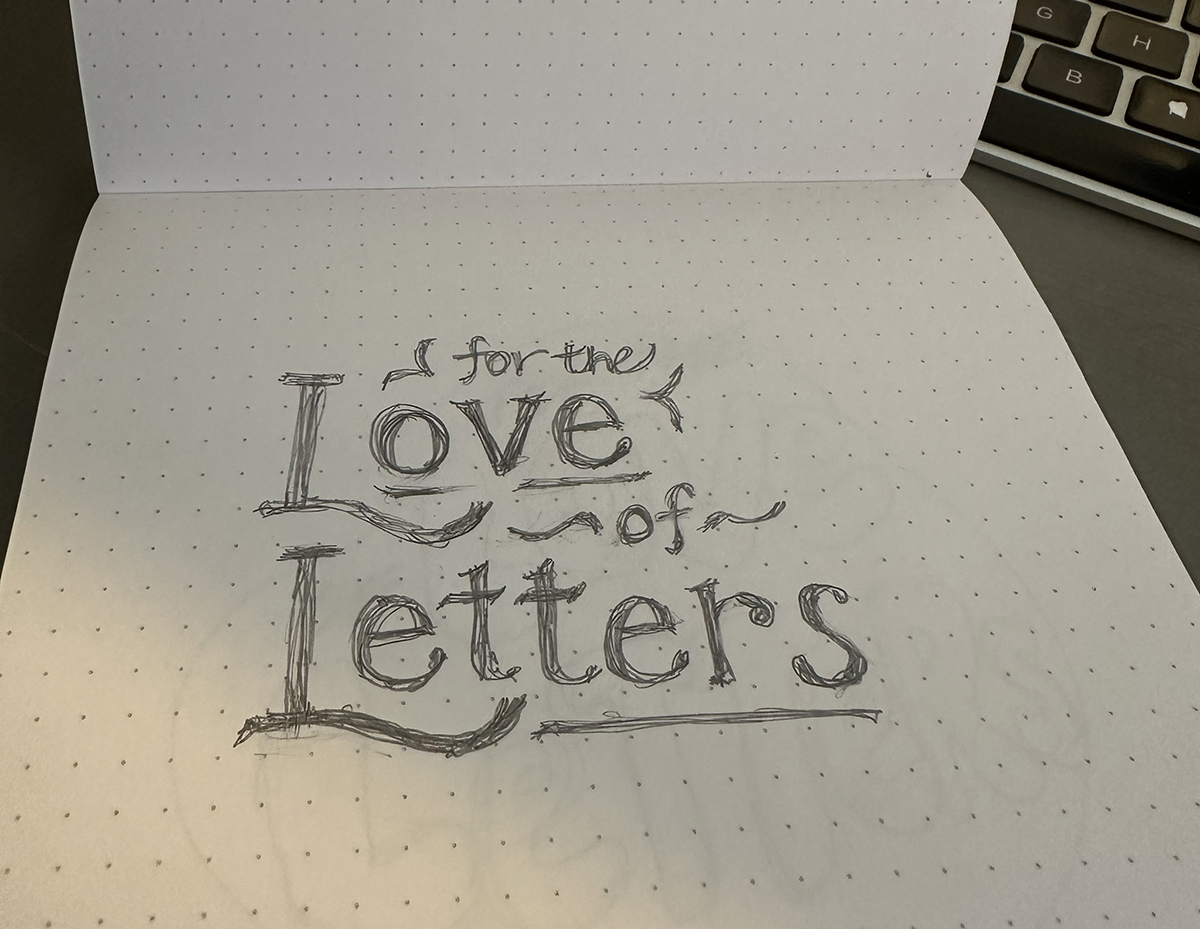
Again, speaking to clarity here. Just because these items are trending doesn’t mean these design elements should be brought in when it doesn’t align with your brand. I’ve been taking some hand lettering courses (see sketch below) so #5 piqued my interest. I’m envisioning a use for these trends on internal communications posters, as an example.
Not sure how to incorporate or curious to learn more? Reach out and let’s chat to see if it’s appropriate to infuse any of these trends into your brand!