

Supply Chain Strategies
Supply Chain Strategies NAM Webinar
July 15th Speakers:
- Bea Landa, VP Metal Procurement & Recycling at Novelis
- Dev Ahuja, CFO at Novelis
- Sue Savage, CFO at Blue Yonder
- Hong Mo Yang, SVP, Manufacturing Industry & Strategy at Blue Yonder
What will be the impact of COVID on Manufacturing?
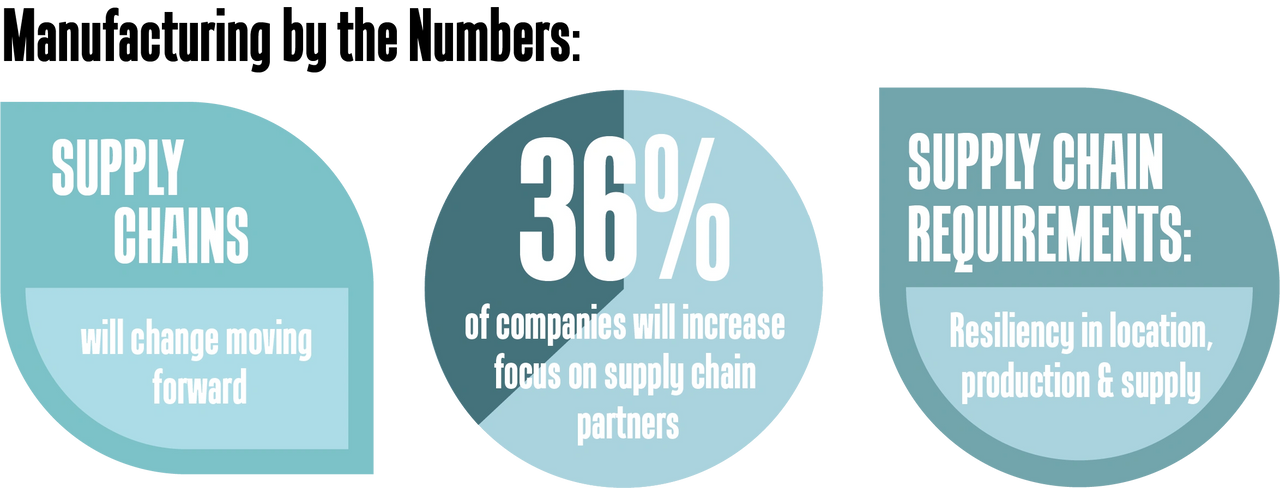
One thing companies are realizing is that by creating more agile processes in the supply chain they will be able to switch gears quickly when a crisis happens. According to the NAM survey, two third’s of companies said they will increase their focus on supply chain moving forward, especially companies with long global supply chains.
Companies will begin to reinvest in:
- Analytics
- Crisis management collaboration between teams
- Disaster preparedness
- Shared values & common purpose
Work will change to virtual moving forward, with health and hygiene at the top of the list
Two third’s of companies said yes, they will be accelerating digital technology in the future, which means increased automation on the floor and re-training to handle digital tools. Front-line workers on the floor can’t be remote and there are issues with how to connect the remote workers with front-line personnel, but the industry is still pressing ahead, even with these new realities. Not having a high level of detail and information won’t stand moving forward – and will force supply chains to be more efficient with a drive to digitization.
What have we learned?
According to Dev at Novelis, the pandemic was a crash course in many things; risk management, business continuity, and enterprise risk management planning. Businesses were prepared for everything except a pandemic – others on the panel agreed. Companies were caught off guard with COVID and are dealing with huge learning curves. He was positively surprised that they’ve managed as well as they have and have still been able to get products to their customers within 3 months in the short term (which seems long right now) versus the long term. Bea added that agility has been key. Some OEM’s were shut down for 24 hours because of COVID, then would open up again, but everything was very sporadic. Metal had little flow with the shutdown. Her advice? In the past companies have held their cards close to the chest, but partnering with suppliers has been a positive experience. Having a broad network of suppliers has been important, too.
4 ways to reduce economic impact:
- Risk management plan
- Agility
- Real-time process
- Ability to adapt
Surveys show several trends of moving from global to regional supply networks.
Online culture is important right now, companies that had no online presence are investing in that now. Many companies are rethinking the supply chain model to increase digital tools and be more localized. Sue agreed with Dev on value vs. cost efficiency. Using technology to drive value for customers and businesses, as well as learning how to allocate resources to evolve quickly.
Either way you look at it, use of technology has gone up and companies are doing things that were unthinkable 2-3 years ago. It will be important to bring technology and data together to compile information quickly and collaborate more efficiently. This is an opportunity to look towards the future of manufacturing in a new light.