
🎨 AI: A Design Odyssey
Should you be using AI?
AI has become a loaded topic, especially in the last year. People have varying opinions, from seeing it as a way of the future to being completely against it. I can see both sides. I think it really comes down to your motive for using it. Here are some things I consider when using AI from a design framework.
The Good
I’ve been using ChatGPT and Perplexity to help me research topics for my newsletter or learn how people at organizations like yours are using it, such as for customizing marketing campaigns and outreach. AI seems like a great resource for data analytics and marketing personalization.
I also see the value of AI in some of the design programs I use. It generates ideas quickly and can help automate tasks like cropping out backgrounds or resizing images. These perks save time — which ultimately saves you money as the client.
The Bad
I recently noticed that several stock photo resources are providing images created with AI. These images tend to look fake, almost with an airbrushed quality to them. When searching for images, these will pop up with a little icon next to them, letting you know they were generated with AI. I have the capability to turn AI image options off, and I do this for a few reasons:
- Ethical implications: I’ve heard that AI uses and alters existing photos and designs, which means they do not pay the original models/photographers/illustrators who created them in the first place. AI images also tend to have a lack of representation and diversity, generalizing and stereotyping groups of people, which is harmful.
- Legal implications: For me, it’s not worth the risk of using an image that has been altered, especially from a copyright standpoint. How do I know what the original source is for these images? And could I be liable for using them in design projects?
- Design imperfections: I’ve noticed these images stand out — and not in a good way. The images I’ve found have an airbrushed look to them, and there is always something a little “off” in the photos. As I took a closer look at one of these photos, I could see certain parts of a face that looked altered and fake. If you are sourcing stock photos created with AI for internal projects, take a closer look before you add them to your marketing materials.
At this point, I don’t plan on using images created with AI, and I don’t believe it will be replacing my job anytime soon. After all, “design is much more than software skills,” to quote my friend Lauren Wickware, in her recent email newsletter on the topic of AI. I do think that it can be a great resource when it comes to research or generating ideas quickly, but I don’t think it will fully replace the human element, at least not yet.
Life Imitating Art
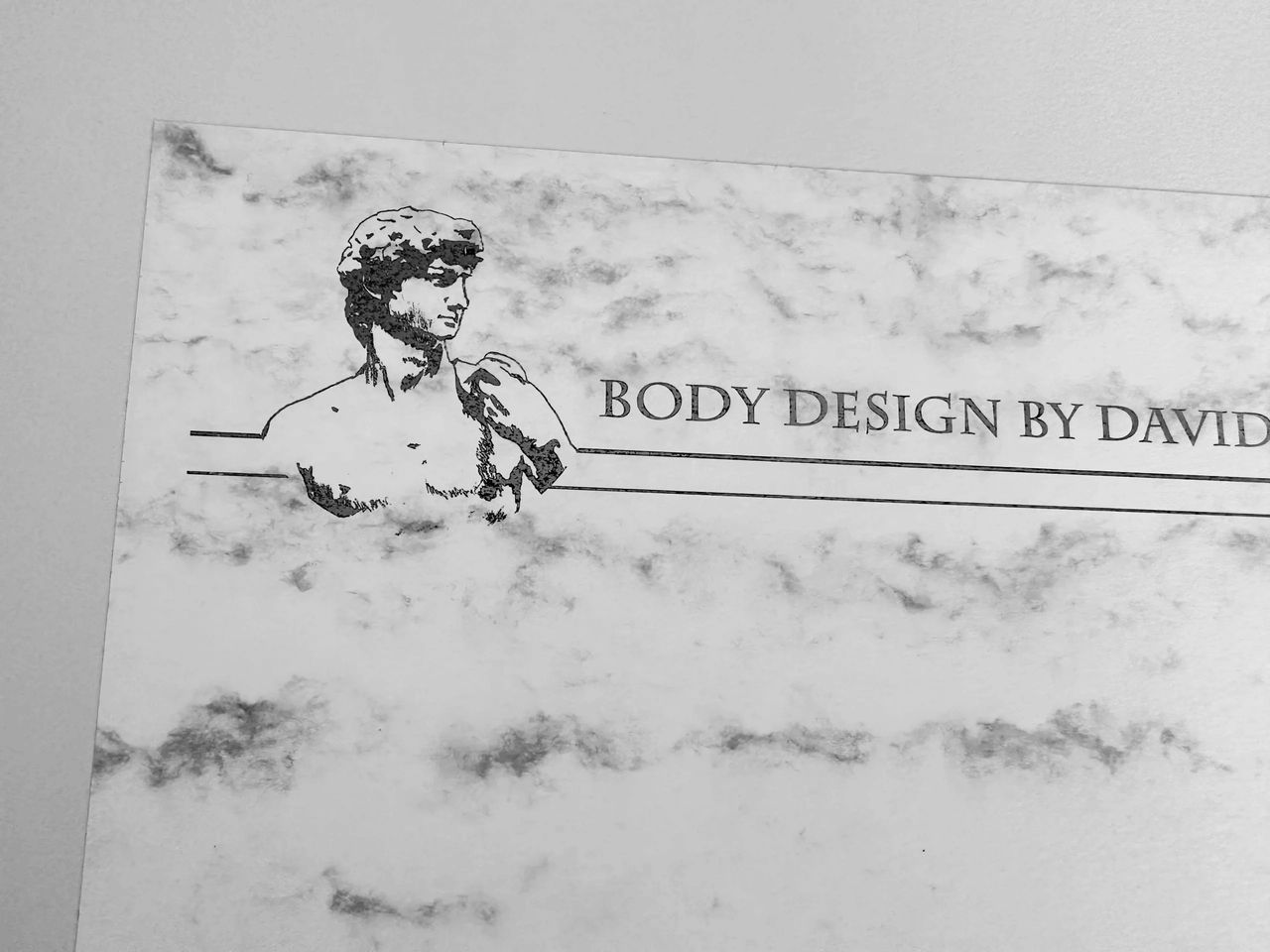
I don’t know if you noticed, the image above looks very similar to Michelangelo’s statue of David. This particular piece has always interested me, as I had the opportunity to see it IRL on an Art History May Seminar after graduating college. Our group flew into London, toured museums there and throughout Italy and Greece, with a final flight out of Paris. My Art History professor at Concordia College was an excellent guide – it was such an amazing experience to be able to see all of the art we had studied in class. I still love visiting any type of museum today, even if I was a bit tired of them by the end of the trip! It reminded me I had also used David as the inspiration for one of my graphic design projects in college when tasked with designing a logo for a health club. It was fun looking back on past class projects and thought it would be fun to share here.
Looking for a designer?
I’m curious — how are you using AI in your day-to-day and/or marketing processes? I’d love to have a conversation to hear the ways you’ve been finding it helpful. If you are interested in any help navigating these new tools in the changing design/marketing landscape, book a call with me.