

Brand, Packaging and Sustainability – Can we all get along?
Published in Packaging World: July Issue 2021 p. 64
Click here to view full article in PDF format.
Like all IoPP members, I’ve done a lot of virtual networking with other packaging professionals over the past year. And one thing that keeps coming up is the topic of sustainability. Everyone seems eager to talk about it, but everyone also seems to have a different idea about what sustainability means and what the best solution could be. So I’ll add my two cents to the conversation.
As a graphic designer who works on package and label design for clients in the manufacturing and packaging space, I must stay current and continuously be learning about the packaging industry. I do this for my own business, but also to help my clients. In fact, I recently joined a group of Climate Designers to be more focused and intentional about designing for the environment.
I deal with regulations and compliance for all types of industries on projects that range from warning requirements for a chemical product label to the brand identity and packaging design for a brand new food product. It can be complicated when limited to the U.S. But when a company decides to expand their reach outside of the U.S., there are even more items to consider. Each country requires specific regulations for products, down to the specific font size of the warnings, (not to mention running into size constraints when adding translations to your product label).
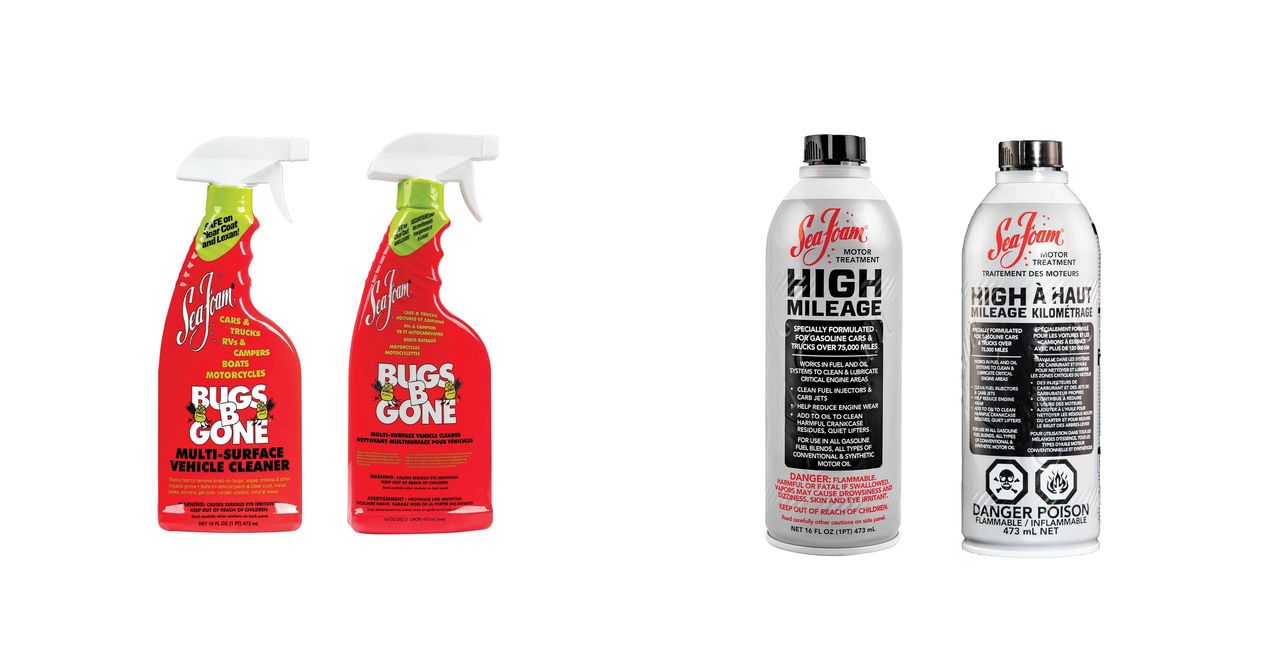
Here is an example of some label designs I created for Sea Foam that were translated from the U.S. to Canadian markets, which included English and French language with different warning requirements for each, based on ingredients.
Whatever the product, there are regulations on the cartons used for shipping, transportation, storage and shelf-life. These regulations can be confusing and conflicting and can affect the original design of the product. That’s why a graphic designer needs to problem solve if they are to stay true to the brand.
When it comes to sustainability, it has become even more complex. With everyone staying at home more in 2020, we were forced to see how our daily habits contribute to waste. Having more things shipped to our homes quickly brought that fact to light. Instead of eating out and having the restaurants deal with the waste, we got to eat at home and can’t help but see the waste it creates, whether it’s single-use products or online shopping of consumer goods.
There is no consensus on best practices for recycling. For example, some companies think glass is the most sustainable, but in reality (at least here in Minnesota) glass has to be shipped somewhere else for cleaning before it can be recycled. Plus, the different colors of glass have to be contended with. It would be fine if we were to use only glass milk bottles like back in the day (which did get cleaned and reused) but they were all the same size and color. Glass also weighs more than plastic. The emissions from shipping have to be factored into the sustainability piece for this as well.
Here are a few more recycling issues:
- People are not always knowledgeable about what’s recyclable in their area; it depends on what state you live in and each recycling facility’s capabilities.
- Food packaging can’t always be recycled if there’s food on it. Some people even try to recycle crazy things like bowling balls – true story!
- Waste Management facilities can’t always recycle at a profit. Overseas shipments are not happening anymore, so what does that mean for U.S. landfills?
- Every brand wants their product packaging to stand out on the shelf, which is actually part of the problem. By using the same glass color for all your bottles, how will yours stand out on the shelf?
Things to Consider When it Comes to Packaging post COVID
1) How do you create new systems and processes that are more sustainable when consumers also demand individual “fast” packaging? Eliza Erskine, Owner of Green Buoy Consulting, who specializes in helping companies with their sustainability plans, says that there has been a definite shift from consumer responsibility (like recycling efforts) to more corporate responsibility. And that shift is starting. Larger corporations that used to say “this doesn’t apply to my industry” are now working with their internal departments to manage their sustainability efforts. Erskine goes on to say that even small to medium sized companies which make up 80% of the economy — are following suit.The main barrier to her clients using sustainable materials is the cost to implement these programs.
2) With a definite shift from personal responsibility to more corporate responsibility, we may see more regulations coming out in the future that require using items that are more sustainable. My challenge, as a designer, is to address this without every product looking the same. Packaging presentation is so important to the look and feel of a company’s brand. Two popular examples include Apple or Gucci. Will upscale brands like these want to make a change to brown paper packaging? It’s important for designers to find more sustainable design solutions if regulations change, but still keep the company’s brand in mind while using new materials.
3) According to an article in Fortune magazine, consumers want more sustainable options, yet price and brand are still at the top of their list when making purchases. There is no doubt that we need a more circular product lifecycle. With companies like TerraCycle launching a global recycling program that includes recycling difficult items like car seats, etc., this will bring a policy shift with a greater emphasis on accepting more items for recycling and a trend towards designing items for the environment.
I’m hopeful that these conversations are happening in the first place and I truly believe that there is a solution to this issue. Small changes will add up, and little by little we’ll get there.